


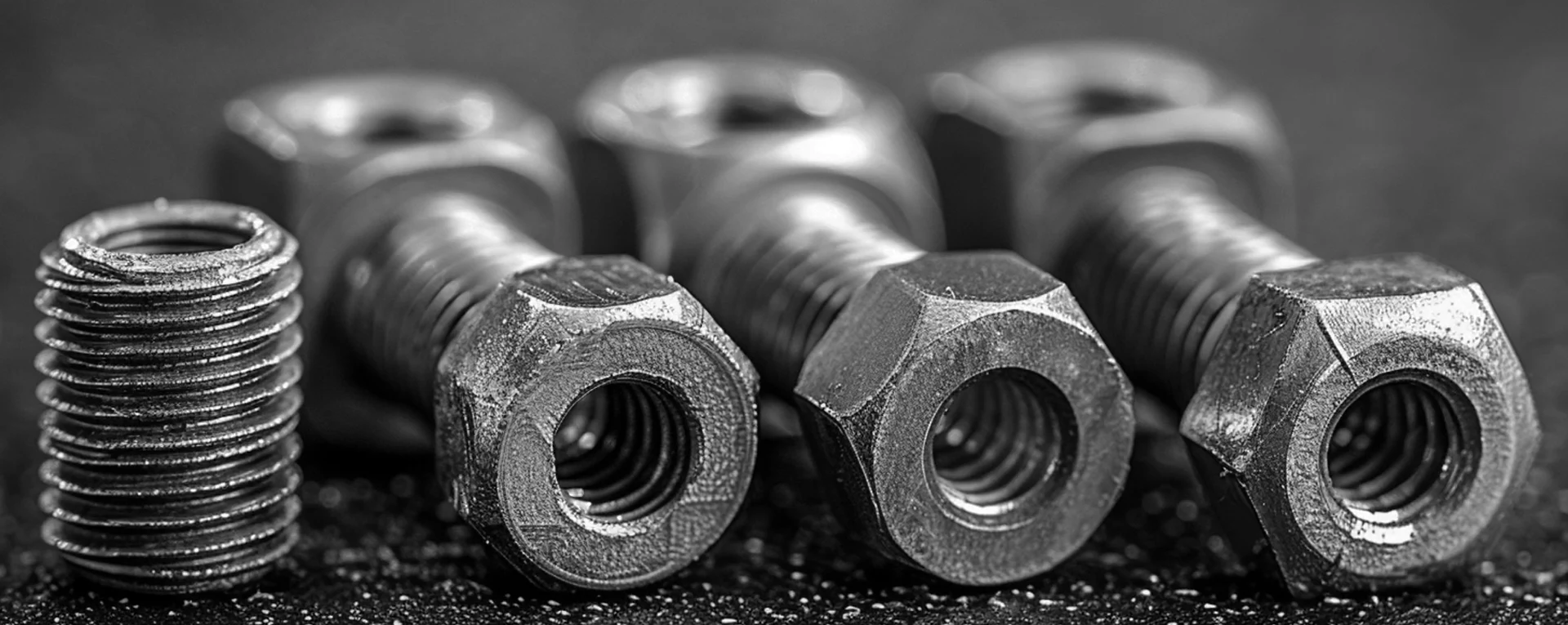
The turning of steel parts is a central process in the manufacture of precision technical components for demanding industrial environments. Thanks to its mechanical strength, dimensional stability and versatility, steel remains an essential material for the production of turned steel parts in medium and large series.
Used for the manufacture of steel fasteners, assembly parts, shafts, threaded components or functional mechanical parts, steel offers an excellent compromise between robustness, machinability and cost control.
Steel turning allows the production of precise geometries with tight tolerances, while ensuring repeatability and production regularity.
At Billardy, the mastery of steel turning and cold forming meets the needs of industrial customers looking for a partner capable of producing technical steel parts with a high level of precision, reliability and competitiveness.
Depending on the constraints of the part, the volumes and the functional requirements, Billardy adapts the manufacturing process to optimize quality, mechanical performance and production cost.

Turning of steel parts: machining constraints, precision and industrial mastery
Steel bar turning requires perfect control of machining parameters to ensure dimensional conformity, production stability and the mechanical performance of manufactured parts.
If steel is a material particularly used in the manufacture of precision technical parts, its behavior during machining varies greatly according to its grade, hardness, mechanical strength or even its ability to withstand certain secondary operations.
The manufacture of turned steel parts does not only consist in removing material. It involves mastering all the constraints related to the part geometry, tolerances, surface conditions, functional areas, and finishing or rework operations.
NC steel turning enables the manufacture of complex technical parts requiring a high level of precision and excellent repeatability in series production.
Machining on numerically controlled machines allows for more elaborate geometries with high dimensional stability and perfect tolerance control. This technology is particularly suitable for the production of precision steel parts integrating several functional areas or complex shapes.
The CNC turning of steel parts notably allows to produce:
- shouldered axes,
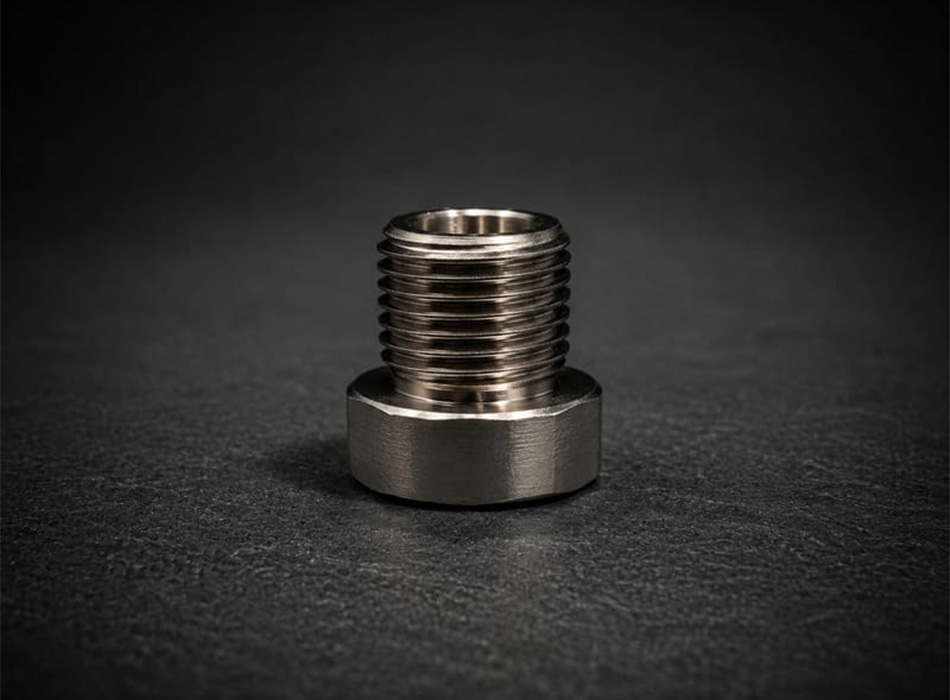
- threaded bushings
- technical spacers,
- specific fasteners,
- mechanical assembly components.
The mastery of the machining cycle, material cutting, tool feed and thermal stability of the process allows for a constant quality, which is essential in medium and large series.
Micro-free-cutting of steel meets the needs for manufacturing small technical steel parts with high dimensional requirements.
The micro-turning of steel parts makes it possible to manufacture small components intended for specific functions:
- micro-axes,
- petites vis techniques,
- centering pieces,
- metals inserts,
- binfing components,
In these configurations, production regularity, material holding precision, and cutting stability become decisive factors to ensure compliance.
Some steel parts require additional operations after turning in order to fully meet the functional requirements of the application.
After steel machining, it is possible to add or finalize certain technical characteristics that cannot be achieved in the main cycle or that require an additional level of precision.
These rework operations make it possible to optimize the functionality of the part, secure its integration into the mechanical assembly, and ensure compliance with the specifications requirements.
In an industrial logic, the control of these secondary operations is an essential lever to produce precision machined steel parts with a high level of quality, repeatability and performance.
Cold forming steel: manufacture of fasteners and technical components in large series
Cold-forming steel has several technical and economic advantages that make it a particularly efficient process for the manufacture of fasteners and repetitive mechanical components.
The first advantage lies in the preservation of the material fiber. Unlike machining, where the material is cut, cold striking deforms the metal without breaking the continuity of its structure. This continuity often improves the mechanical strength of the part, especially in stressed areas.
This process also makes it possible to achieve high production rates, particularly suitable for the manufacture of large series. The execution speed and repeatability of the process make it possible to ensure production consistency while reducing unit time per part.
The manufacture of steel screws, shafts or threaded parts in cold heading is thus part of an industrial logic oriented performance, productivity and economic optimization.
The manufacture of steel parts by cold forming mainly concerns components whose geometry is compatible with material deformation and whose production volumes require high-speed industrial logic.
This process is particularly suitable for the manufacture of steel fasteners, connection components or assembly elements requiring robustness, repeatability and optimization of production costs.
Among the main steel parts produced in cold coining, we find in particular:
- technical steel screws for mechanical assembly and industrial attachment,
- steel rivets for permanent and structural connections,
- steel shafts for guiding, connecting, or transmitting forces,
- steel pins for positioning and mechanical locking,
- metal inserts for assembly or reinforcement operations,
- steel bushings for guidance or functional protection,
- steel threaded parts for fastening or clamping systems,
- centering pins for the precise positioning of mechanical sub-assemblies,
Cold-forming steel enables the production of these components with excellent repeatability, high dimensional stability and high productivity, particularly suitable for large series.
For an industrial looking for a manufacturer of steel fasteners, this process is a powerful solution to reconcile mechanical quality, material optimization and economic competitiveness. At Billardy, the combined mastery of cold forming and steel turning makes it possible to adapt the manufacturing process to the actual function of the part and production constraints.
Cold-forming steel is a manufacturing process particularly suited to the production of fasteners and metal components in large series.
Unlike bar turning, which is based on the removal of material, cold stamping consists in deforming the metal at room temperature to give it its final or semi-final shape.
This industrial process plays a strategic role in the manufacture of steel parts when volumes are high, production rates are high and requirements for repeatability are high.
In the world of technical parts for fastening, bonding or assembly, manufacturing by cold forming allows to quickly produce mechanical components while optimizing production costs and material consumption.
For an industrial, choosing between steel turning and cold forming directly depends on the geometry of the part, the production volume, mechanical constraints and the expected level of finish.
At Billardy, the mastery of cold-forming on steel is a historical know-how that enables us to produce technical parts at high speed with an optimized industrialization logic.
Manufacturing of steel parts: what parts should be produced in bar turning and cold forming?
Steel turning and cold-forming steel make it possible to manufacture a wide variety of technical steel parts intended for the assembly, fixing, guiding or mechanical operation of industrial assemblies.
The choice of process depends directly on the geometry of the part, its mechanical function, the expected level of precision and production volumes. Where the turning of steel parts makes it possible to produce complex geometries with tight tolerances, cold-forming provides a particularly efficient solution for repetitive parts at high speed.
The manufacture of turned steel parts concerns both standard components and technical parts on plans, integrated into more complex mechanical, electromechanical or industrial systems.
At Billardy, the combination of precision bar turning and cold forming on steel allows manufacturing to be adapted to the real needs of the part, its functional constraints and its use environment.
Steel fasteners represent a significant part of the components manufactured in free-cutting and cold stamping.
These parts ensure the mechanical assembly, structural support or connection between several subassemblies. They must guarantee mechanical strength, resistance to tightening, dimensional stability and manufacturing repeatability.
Major steel fasteners include:
- steel screw for mechanical assembly or industrial attachment,
- steel nuts for tightening and locking systems,
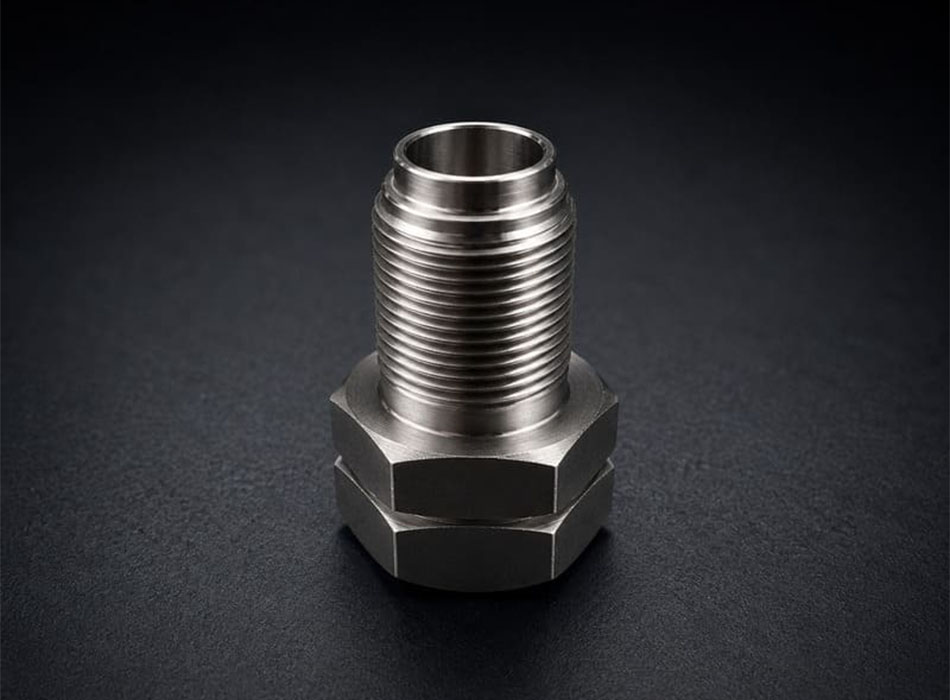
- steel threaded inserts for reinforcement or integration into assemblies,
- steel rivets for permanent or semi-permanent connections.
The manufacture of these components requires perfect control of the threads, functional tolerances and material quality to ensure their behavior in use.
Steel pins and connecting components play a central role in guiding, rotating or force transmission mechanisms.
These technical parts require high dimensional precision, particularly on functional diameters, spans or contact areas.
Turning steel axes makes it possible to produce:
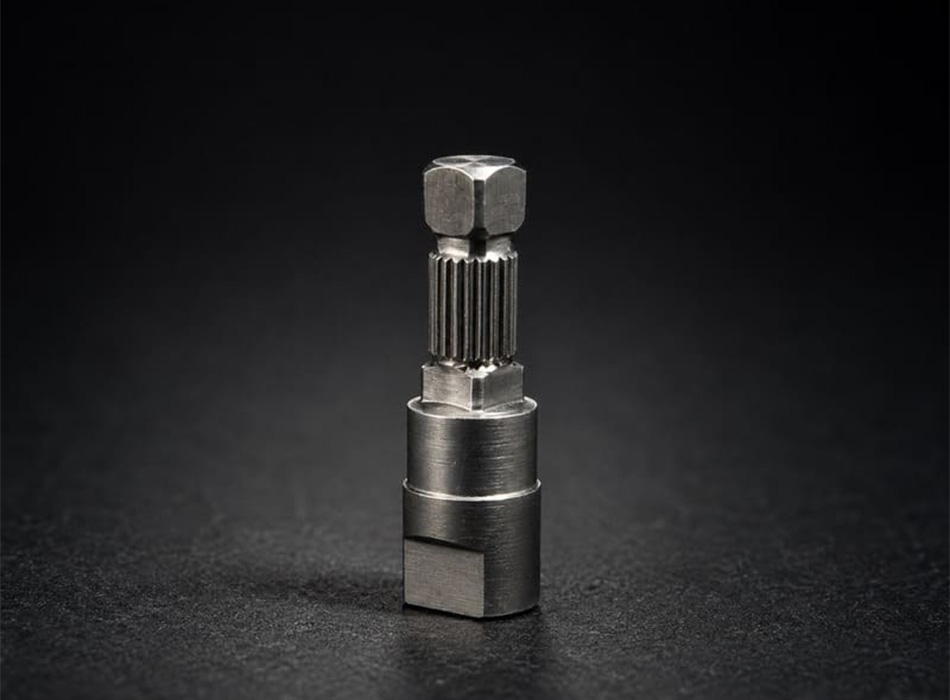
- stepped shafts for axial support or mechanical positioning,
- steel pins for connection or guidance,
- steel pivots for rotation or articulation,
- steel pins for locking, centering, or positioning,
These components are often subject to friction, load or mechanical repetition constraints, which places high demands on machining quality and geometric stability.
Threaded steel parts are a large family of technical components used in assembly, adjustment or mechanical connection.
Threading is an essential function here, requiring precision, strength and perfect dimensional conformity.
The manufacture of threaded steel components concerns in particular:
- threaded sockets for assembly or guidance,
- steel spacers for gap retention or structural connection,
- threaded end pieces for connection or mechanical adaptation,
The turning of steel threaded parts ensures the regularity of the thread profile, quality of engagement and reliability during assembly.
In addition to fasteners or connectors, precision steel turning makes it possible to produce many functional mechanical components directly integrated into industrial mechanisms.
These parts perform specific technical functions:
- mechanical guidance for linear or rotary movements,
- precision centering for alignment or positioning,
- assemblage technique pour intégration mécanique,
These components can include complex shapes, grooves, technical drillings, friction areas or functional surfaces requiring complete control of the manufacturing process.
In which industrial sectors are turned steel parts used?
The automotive industry remains one of the main user sectors for turned steel parts.
The production constraints are particularly strong: high volumes, absolute repeatability, dimensional conformity, mechanical strength and control of part cost.
Steel bar turning for the automotive industry allows the manufacture of a wide variety of technical components:
- mechanical axes
- spacers,
- threaded parts,
- fastening comprenents,
- centering pieces,
- connecting elements,
Cold-forming steel also plays an important role in the manufacture of screws, rivets or fastening components intended for assembling mechanical subassemblies.
The development of drone systems, whether civil or industrial, is generating growing needs for precision technical parts, particularly for mechanical, structural and assembly functions.
While aluminum remains widely used for weight constraints, steel retains an important role for components requiring greater mechanical strength or better wear resistance.
Turning steel parts for drones notably allows the manufacture of:
- rotation axes
- mechanical inserts,
- threaded parts,
- fastening comprenents,
- positioning pawns,
These steel parts directly contribute to the mechanical reliability, structural stability and durability of systems.
The defense sector imposes a high level of requirements on machined steel parts.
Mechanical strength, dimensional stability, manufacturing repeatability and robustness of assemblies are essential criteria for military applications, embedded systems or sensitive technical equipment.
Steel bar turning for defense concerns in particular:
- technical areas,
- locking components,
- connecting parts,
- fastening system,
- mechanical guiding elements,
Mastery of manufacturing, conformity of parts and process reliability are crucial in these environments where failure is not an option.
In the world of industrial connectors, precision steel turning makes it possible to produce technical components for mechanical connection or integration.
These parts must ensure precision, dimensional stability, and perfect assembly compatibility.
The manufacture of steel parts for connectors concerns in particular:
- technical tips,
- metals insert,
- threaded components,
- connection sockets,
- maintain parts
The level of precision required is often high, especially in functional areas or mechanical interfaces.
Industrial electronic equipment incorporates many precision metal parts providing mechanical or integration functions.
Steel turning makes it possible to produce technical components involved in the assembly, maintenance or attachment of electronic sub-assemblies.
Common applications include:
- technical spacers,
- mounting inserts,
- guiding axes,
- centering pieces,
- binfing components,
The need for miniaturization, precision and repeatability makes micro-free machining of steel particularly relevant for certain specific applications.
Turned steel parts play an essential role in many industrial sectors where mechanical strength, dimensional accuracy and operational reliability are decisive criteria. Thanks to their mechanical properties and their ability to adapt to various geometries, components manufactured in steel turning or in cold heading steel meet a wide variety of technical applications.
Whether it is steel fasteners, connecting pins, threaded components or functional mechanical parts, the manufacture of technical steel parts concerns both high-speed production and components integrated into complex industrial assemblies.
At Billardy, this ability to produce precision steel parts makes it possible to support different industrial sectors with specific requirements in terms of quality, repeatability and mechanical performance.
Free-cutting steel or cold forming steel: which process should you choose to manufacture your parts?
In the manufacture of technical steel parts, the choice between steel turning and cold forming is a decisive step in defining the industrial process. These two processes respond to different manufacturing logics, with direct impacts on the part geometry, production cost, manufacturing rates, and final mechanical performance.
Choosing between free-cut steel or cold-formed steel does not depend solely on the material, but on the actual function of the part, its geometric complexity, the expected level of precision and the production volume.
At Billardy, this dual expertise allows each project to be directed towards the most appropriate process, in order to optimize industrial feasibility, final quality and economic competitiveness.
The turning of steel parts is based on a machining process by removing material to produce parts with complex geometries with a high level of precision.
This process is particularly suitable when the part incorporates:
- several successive diameters,
- recesses,
- technical drillings,
- des filetages spécifiques,
- functional throats,
- complex or combined shapes,
Precision turned steel ensures tight tolerances, excellent surface quality and great design freedom.
The cold-forming of steel is based on a completely different logic: instead of removing material, the metal is mechanically deformed in the cold to obtain the desired geometry.
This process is particularly efficient for the manufacture of repetitive steel parts, with shapes compatible with material deformation.
This preservation of the material structure constitutes an important mechanical advantage on certain fastening parts or components subject to stress.
The manufacture of steel screws, rivets, single pins or pins fits perfectly into this logic.
La frappe à froid devient particulièrement pertinente lorsque le volume de production est élevé et que la pièce présente une géométrie industrialisable.
The choice between free-machining and cold-forming steel is based on several technical and industrial criteria. Each process meets specific manufacturing constraints and must be selected according to the actual function of the part, its level of complexity and its economic objectives.
Several criteria guide this choice:
- The geometry of the part: the more complex shapes, shoulders, drillings, grooves or specific threads a part has, the more suitable the steel turning will be. Conversely, a simple or repetitive geometry will favor cold striking of steel,
- Production volume: turned parts offer high flexibility for medium series and specific technical parts, while cold forming becomes particularly efficient and cost-effective on large series.
- The manufacturing cost: the cost must be analyzed in its entirety. Turning brings precision and flexibility, while cold-forming greatly reduces unit cost thanks to speed and material optimization,
- The level of tolerance: when a part imposes tight tolerances or sensitive functional areas, precision steel turning allows better dimensional control,
- The production rate: for high-volume or recurring industrial needs, cold rolling offers particularly high manufacturing rates,
- Material optimization: cold-forming strongly limits material loss thanks to metal deformation, where machining generates chips by removing material,
- Expected mechanical performance: the preservation of the material fiber under cold impact can improve the mechanical strength of certain parts subjected to stress or tightening,
In an industrial logic, the right process is not simply one that reduces manufacturing costs, but one that allows to find the best balance between technical function, production quality, industrial pace and economic competitiveness.
It is precisely this approach that Billardy develops, by combining steel turning and cold forming according to the actual constraints of each project.
Billardy: manufacturer of steel parts in free-cutting and cold forming since 1946

Since 1946, Billardy has been supporting manufacturers in the manufacture of precision steel parts by drawing on its historical expertise in bar turning and cold forming. This dual competence allows us to meet various needs, ranging from technical parts on plans to the production of fastening components, shafts, threaded parts or functional mechanical components for demanding industrial environments.
Mastering several manufacturing processes is a real lever for industrial optimization. Depending on the geometry of the part, functional constraints, production volumes or economic objectives, Billardy directs each project towards the most relevant solution: CNC turning steel, micro-turning, cold forming, recovery operations or technical finishing.
Are you looking for a steel parts manufacturer, a precision turning specialist or a partner that can produce your fasteners in medium or large series?
Contact Billardy to study your project and identify the manufacturing solution best suited to your technical, functional and industrial constraints.