


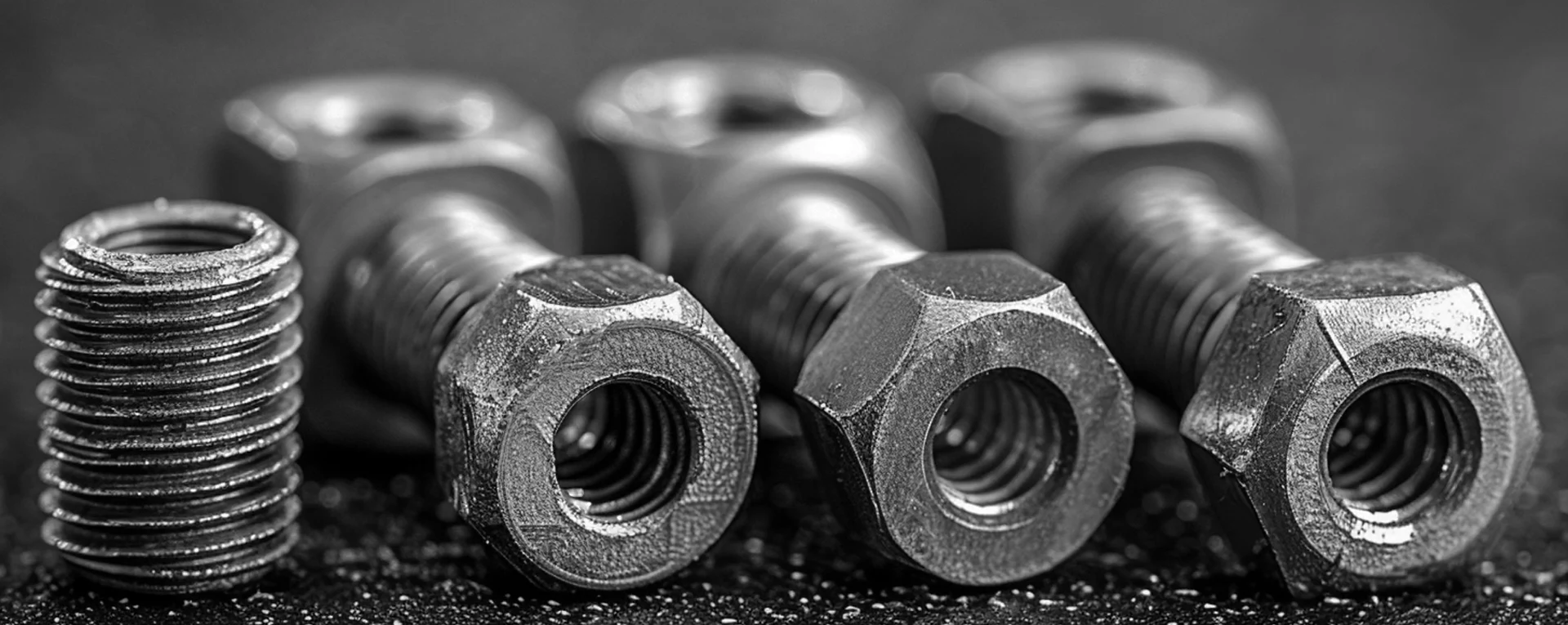
Precision titanium Swiss machining enables the production of technical components designed for the most demanding industrial environments.
Thanks to its excellent mechanical strength/weight ratio, high corrosion resistance and stability under severe conditions, titanium is now used in many sectors requiring technical parts with high functional value.
Machining titanium parts meets the needs of manufacturers seeking components capable of withstanding significant mechanical, thermal or chemical stresses while maintaining a high level of dimensional accuracy and reliability.
Unlike other materials that are easier to machine, titanium requires perfect control of cutting parameters, tools and machining conditions in order to ensure dimensional stability, surface finish quality and production repeatability.
At Billardy, the mastery of precision titanium machining makes it possible to support manufacturers looking for a manufacturer of titanium parts, a titanium machining subcontractor or a specialist capable of producing technical titanium parts on plan with a high level of quality, control and industrial performance.
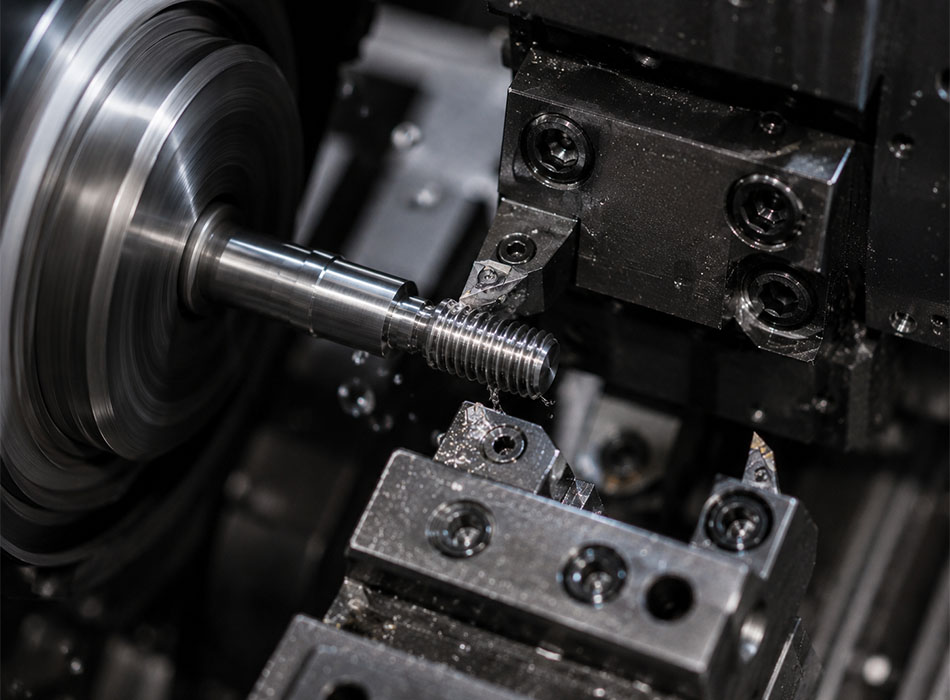
Turning of titanium parts: machining constraints, dimensional precision, and mastery of titanium alloys
Titanium bar turning requires perfect control of machining parameters in order to guarantee dimensional conformity, production stability and the functional quality of manufactured parts.
Used in demanding industrial environments, titanium has mechanical and thermal characteristics that make its machining more complex than that of many other metallic materials.
La fabrication de pièces titane usinées nécessite ainsi une expertise spécifique sur l’ensemble du process : choix des conditions de coupe, stabilité thermique, gestion des efforts mécaniques, tenue des outils et maîtrise des états de surface.
The manufacture of titanium technical parts does not consist only in removing material. It implies a perfect mastery of all the constraints related to the geometry of the part, the functional areas, the surface requirements, the possible rework and the expected mechanical performance.
At Billardy, this mastery of titanium turning makes it possible to support manufacturers looking for a titanium machining subcontractor capable of producing complex technical components with a high level of precision, reliability and production stability.
Titanium CNC machining enables the manufacture of complex technical parts requiring a high level of dimensional precision and excellent production repeatability. Thanks to digital control technologies, it becomes possible to machine complex geometries while maintaining perfect control of tolerances, surface states and process stability.
Machining on CNC machines makes it possible to produce precision titanium parts integrating several functional areas, successive diameters, technical threads, complex drillings or shapes requiring several operations combined in the same machining cycle.
The turning of titanium parts makes it possible to manufacture:
- precision titanium axis,
- titanium threaded component,
- technical titanium ring,
- mechanical titanium tip,
- the titanium connecting part,
- titanium aeronautical components,
- titanium medical part,
- technical component for drones,
The thermal stability of the process is a major issue in titanium NC machining. Temperature variations can directly impact the geometric stability of parts and the tolerance performance. Mastering cutting conditions, machine rigidity and tools is therefore essential to ensure consistent quality in medium and large series.
Precision titanium bar turning thus meets the requirements of industrial sectors seeking high value-added technical components, with a high level of mechanical reliability and industrial repeatability.
Titanium is recognized as a particularly demanding material to machine. If its mechanical properties and corrosion resistance make it a strategic material for many industrial applications, they also generate significant stresses during turning and machining operations.
One of the main difficulties of titanium turning is its low thermal conductivity.
Titanium is recognized as a particularly demanding material to machine. If its mechanical properties and corrosion resistance make it a strategic material for many industrial applications, they also generate significant stresses during turning and machining operations.
During the machining of titanium parts, cutting forces can also become significant, especially on complex geometries or small section parts. These mechanical stresses promote the appearance of vibrations that can disrupt dimensional stability and degrade surface conditions.
At Billardy, the expertise in bar turning makes it possible to produce technical titanium parts with a high level of precision and consistency, even on complex geometries or miniaturized components.
Titanium micro-turning meets the needs for manufacturing small technical parts requiring very high dimensional precision and perfect production stability.
The increasing miniaturization of industrial, electronic, medical or aeronautical equipment generates significant needs for titanium micro-parts capable of integrating complex mechanical functions in small volumes.
The micro-turning of titanium parts makes it possible to produce:
- titanium micro-axis,
- miniature threaded titanium component,
- technical titanium insert,
In these configurations, the control of vibrations, material retention, cutting forces and thermal stability becomes particularly critical. The small dimensions of the components impose extreme precision on the tool trajectories and the regularity of the machining cycle.
Some machined titanium parts require additional operations after the main turning cycle in order to fully meet the functional, mechanical, or dimensional requirements of the specifications.
Machining after titanium allows you to finalize certain technical areas or add specific characteristics requiring a further level of precision.
In precision titanium machining, the quality of surface finish is often a decisive criterion, especially for components subject to friction, mechanical stress or corrosive environments.
The dimensional inspection of titanium technical parts also ensures compliance with tolerances, geometric stability, and manufacturing repeatability across all productions.
The control of these secondary operations is an essential lever to produce precision titanium parts with a high level of quality, reliability and industrial performance.
Manufacturing of titanium parts: what technical parts should be produced in precision bar turning?
Titanium fasteners play an important role in the manufacture of technical components intended for environments subject to high mechanical, thermal or corrosive stresses.
Thanks to its excellent mechanical strength/weight ratio, titanium makes it possible to produce fastening components that are both robust, lightweight and durable.
The turning of titanium fasteners makes it possible to manufacture:
- titanium screw,
- titanium insert,
- rivet titane,
- composant fileté en titane,
- technical fastening and assembly element,
These titanium components are particularly used in sectors seeking a mass reduction without compromising on the mechanical strength or reliability of the assemblies.
Titanium turned parts can thus be used to produce technical fasteners that combine lightness, durability and high mechanical performance.
Titanium pins and mechanical connection components play an essential role in guiding, rotating, force transmission or mechanical positioning systems.
Precision titanium bar turning makes it possible to produce components capable of withstanding significant mechanical stresses while limiting the mass of the mechanical assemblies.
The manufacture of titanium mechanical connection parts concerns in particular:
- titanium technical shaft,
- titanium pivot,
- mechanical titanium pin,
- centering titanium pin,
- guiding titanium component,
- titanium part for support or articulation.
These components require excellent geometric stability, especially on functional diameters, mechanical spans or contact areas.
The machining of titanium axes also requires perfect control of tolerances in order to guarantee precision movements, regularity of assemblies and reliability of integrated mechanisms.
In aeronautical, medical, drone or industrial applications, these components directly contribute to the overall mechanical performance of systems.
Titanium threaded parts are a wide family of technical components used in assembly, mechanical bonding, fastening or adjustment operations.
The turning of titanium threaded parts requires very high precision on the thread profiles, functional areas and engagement dimensions in order to ensure the quality of the connections and the mechanical stability of the systems.
The manufacture of titanium threaded components concerns in particular:
- titanium case,
- titanium spacer,
- threaded titanium tips,
- mechanical assembly component,
- threaded titanium connecting part,
- titanium technical fitting,
The titanium thread imposes perfect control over machining conditions in order to limit the phenomena of heating, deformation or tool wear that can impact the final quality of the profile.
The manufacture of titanium parts on plan makes it possible to meet the needs of industrialists seeking specific technical components adapted to precise mechanical, geometric or environmental constraints.
Titanium machining on plans concerns technical parts with high requirements in terms of tolerances, dimensional stability, surface finish or mechanical performance.
At Billardy, each project to manufacture a titanium technical part is part of a logic of complete industrial mastery.
This approach supports manufacturers seeking a titanium subcontractor capable of producing complex technical parts in medium and large series with a high level of quality and industrial reliability.
Precision titanium bar turning makes it possible to manufacture a wide variety of technical parts intended for demanding industrial environments where mechanical strength, weight control, dimensional stability and corrosion resistance are decisive criteria.
Thanks to its mechanical properties and ability to maintain excellent performance under severe conditions, titanium is used for the manufacture of high-functional technical components integrated into mechanical, aeronautical, medical systems, electronics or industrial.
The choice of free-machining titanium parts allows to produce complex geometries with tight tolerances, while ensuring a high level of manufacturing repeatability in medium and large series.
At Billardy, precision titanium machining makes it possible to adapt manufacturing processes to the actual requirements of each part in order to ensure compliance, production stability, and the mechanical performance of manufactured components.
Which titanium alloys should be chosen to manufacture precision technical parts?
The choice of a titanium alloy is an essential step in the manufacture of precision technical parts. Not all titans have the same mechanical, thermal or chemical characteristics, and each grade meets specific use constraints depending on the industrial environment, mechanical forces or functional requirements of the part.
The manufacture of machined titanium parts requires a perfect match between the properties of the alloy and the actual constraints of the application.
Some grades are particularly suitable for corrosive and chemical environments, while others are used for applications requiring very high mechanical strength or excellent stress behaviour.
At Billardy, the mastery of machining titanium alloys allows manufacturing processes to be adapted to the specific characteristics of each grade in order to guarantee precision, production stability and mechanical performance of the manufactured parts.
Grade 2 titanium is one of the most widely used titanium alloys in industrial applications requiring high corrosion resistance and excellent stability in aggressive environments.
Titanium grade 2 machining nevertheless requires perfect control of cutting parameters in order to limit heating phenomena and preserve the dimensional stability of the parts.
This nuance is thus a particularly relevant solution when the priority concerns the chemical resistance, durability and reliability of technical components.
Titanium grade 5, also known as Ti-6Al-4V, is the most widely used titanium alloy in high mechanical performance engineering applications.
Thanks to its excellent strength-to-weight ratio, it is now considered a reference in industrial sectors seeking components that are both light, resistant and durable.
Titanium grade 5 machining makes it possible to manufacture technical parts intended for applications subject to significant mechanical stress, high dynamic loads or harsh environments.
Titanium machining Ti-6Al-4V remains however particularly demanding. The high mechanical strength of the material generates significant cutting forces requiring perfect control.
CNC machining Titanium grade 5 allows to produce complex technical components with a high level of precision and repeatability for the most demanding industrial applications.
The choice of a titanium alloy directly depends on the functional, mechanical and environmental constraints to which the part will be subjected during use.
Some applications focus primarily on corrosion resistance, especially in chemical, marine or wet environments. In this type of configuration, grade 2 titanium is often a particularly suitable solution.
Conversely, when components must withstand high mechanical loads while maintaining a reduced mass, titanium grade 5 (Ti-6Al-4V) generally becomes the preferred grade thanks to its high mechanical performance.
The choice of alloy also directly influences precision titanium machining. Some grades generate more cutting forces, thermal stresses or tool wear, which can impact manufacturing strategies and production costs.
At Billardy, this mastery of the various titanium alloys allows each project to be oriented towards the grade best suited to the real constraints of the part and the requirements of the final application.
In which industrial sectors are machined and turned titanium parts used?
The aeronautics and space industry is one of the main sectors using turned titanium parts. In these environments, the technical constraints are particularly high: mass reduction, mechanical strength, fatigue resistance, dimensional stability and safety of assemblies.The aeronautics and space industry is one of the main sectors using turned titanium parts. In these environments, the technical constraints are particularly high: mass reduction, mechanical strength, fatigue resistance, dimensional stability and safety of assemblies.
Titanium plays a strategic role in the manufacture of aeronautical components thanks to its excellent strength/weight ratio. This ability to limit the mass of systems while maintaining very high mechanical performance is a major advantage in air and space applications.
Aeronautical titanium turned parts can be produced:
- titanium technical axis,
- titanium fastening component,
- threaded titanium part,
- mechanical titanium ring,
- titanium bonding component,
- titanium guide part,
- structural assembly element.
These components must ensure very high geometric stability as well as perfect manufacturing repeatability in order to secure integration into complex mechanical assemblies.
Precision titanium bar turning makes it possible to produce high-performance aeronautical components that meet the reliability, safety and durability requirements of the air and space sectors.
The development of industrial drones, civil drones and technical drones generates growing needs for precision titanium parts capable of combining lightness, rigidity and mechanical strength.
Titanium bar turning for drones makes it possible to manufacture low-mass technical components while maintaining excellent mechanical strength.
The manufacture of titanium parts for drones concerns:
- titanium axis of rotation,
- fastening component,
- mechanical titanium bonding system,
- titanium technical tip,
- threaded part,
- guiding component,
- miniaturized titanium structural elements,
Precision titanium bar turning thus makes it possible to produce reliable and durable technical components adapted to the specific constraints of onboard systems and drone equipment.
The medical sector widely uses machined titanium parts for their mechanical properties, chemical stability and excellent biocompatibility.
Titanium is highly resistant to corrosion and has excellent compatibility with medical and biological environments, making it particularly suitable for surgical equipment and precision engineering devices.
Medical titanium turning makes it possible to manufacture:
- surgical titanium component,
- titanium medical attachment part,
- miniature titanium axis,
- technical linking component,
- threaded part,
- instrumentation component,
- precision medical micro-part made of titanium,
Micro-free machining titanium thus makes it possible to produce miniature technical components with tight tolerances and a high level of quality control.
The durability of titanium and its resistance to corrosive environments are also major advantages in medical equipment requiring reliability, stability and safety of use.
In the industrial connectors and technical electronics sectors, precision titanium bar turning makes it possible to produce miniaturized mechanical components requiring a high level of dimensional stability and assembly precision.
The turning of titanium parts makes it possible to manufacture:
- technical titanium tip,
- miniature titanium bushing,
- threaded titanium insert,
- fastening component,
- guide axes,
- mechanical connection part,
- miniaturised technical component,
The growing need for miniaturization also makes titanium micro-turning particularly relevant for the manufacture of very small technical components requiring high precision and excellent production repeatability.
Thanks to its very high corrosion resistance, titanium is widely used in harsh industrial environments where metal components are exposed to significant chemical, thermal or atmospheric stresses.
Turning titanium parts makes it possible to manufacture technical components capable of retaining their mechanical and dimensional properties under particularly aggressive conditions.
Industrial titanium turning makes it possible to produce:
- threaded titanium component,
- arbre technique en titane,
- mechanical titanium tip,
- titanium fastening system,
- titanium connecting part,
- corrosion-resistant guide component,
In these applications, the durability of components and the stability of mechanical performance are major issues to secure industrial equipment and limit maintenance operations.
At Billardy, the mastery of precision titanium machining helps manufacturers looking for reliable and durable technical components for the most demanding environments.
Turned titanium parts are used in many industrial sectors where mechanical strength, weight control, dimensional stability and corrosion resistance are essential criteria.
Thanks to its mechanical and chemical properties, titanium makes it possible to manufacture technical components capable of operating in harsh environments while maintaining a high level of reliability and durability.
Whether it is titanium parts for aeronautics, medical components, technical axles for drones or components intended for corrosive environments, Precision titanium machining allows the production of complex parts with tight tolerances and excellent industrial repeatability.
At Billardy, mastering the machining of titanium parts allows us to support various industrial sectors requiring a high level of quality, manufacturing stability and mechanical performance.
Billardy: manufacturer of titanium parts and specialist in precision bar turning since 1946
Since 1946, Billardy has been supporting manufacturers in the manufacture of precision titanium parts for the most demanding technical applications. Thanks to its long-standing expertise in precision bar turning and machining of technical components, the company develops manufacturing solutions adapted to the mechanical, thermal and environmental constraints specific to titanium alloys.
Titanium bar turning requires perfect control of machining parameters, cutting strategies, and production stability to ensure the conformity of parts and industrial consistency of manufacturing.
The complexity of titanium machining requires specific expertise across the entire process, from the analysis of requirements to the final inspection of manufactured components.
Thanks to its industrial expertise, Billardy supports both medium-series needs and large-scale production, with a constant demand for quality, consistency of manufacturing and reliability of delivered parts.
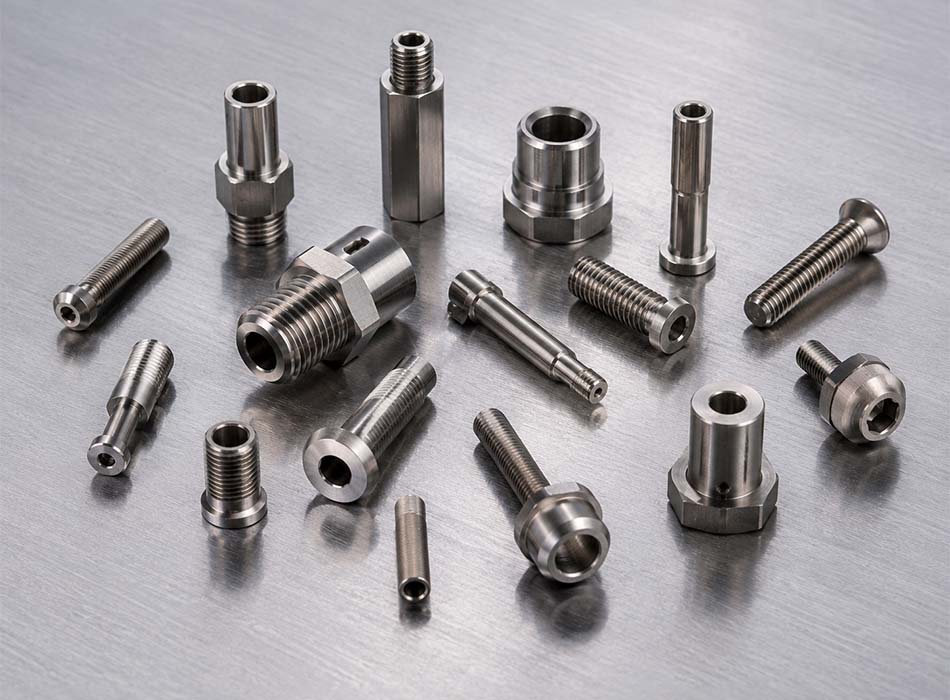
Are you looking for a manufacturer of titanium parts, a specialist in precision titanium free-cutting or a titanium machining subcontractor capable of producing complex technical components from drawings?
Billardy supports manufacturers in the manufacture of high-precision titanium parts adapted to the most demanding mechanical, thermal and environmental constraints.