


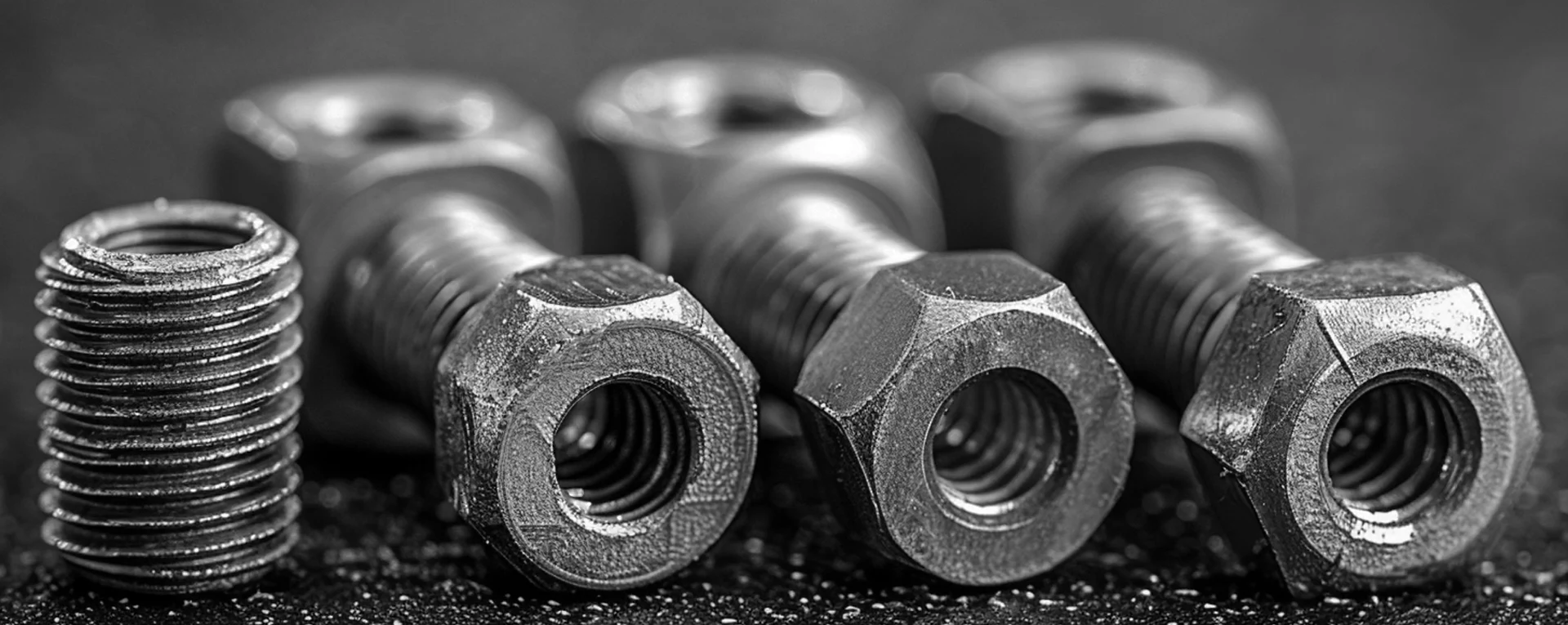
Precision stainless steel bar turning is a key process in the manufacture of technical stainless steel components designed for demanding industrial environments. Thanks to its high corrosion resistance, mechanical strength, durability and hygienic properties, stainless steel has established itself as an essential material for the production of turned stainless steel components in medium and large production runs.
The manufacture of stainless steel parts by bar turning enables the production of precision stainless steel components incorporating fastening, assembly, guiding or mechanical coupling functions, with tight tolerances and high production repeatability. Machining stainless steel requires perfect technical mastery to manage the material’s specific challenges: work hardening, overheating, tool wear and surface finish quality.
At Billardy, the bar turning of stainless steel parts to drawing draws on long-standing industrial expertise, enabling the manufacture of machined stainless steel parts tailored to the technical, mechanical and functional requirements of numerous industrial sectors. Depending on the part’s geometry, the grade of stainless steel and the application’s constraints, Billardy adapts its process to guarantee precision, reliability and industrial performance.

Bar turning of stainless steel parts: machining constraints, dimensional accuracy and material control
The bar turning of stainless steel parts requires perfect control of the manufacturing parameters to ensure dimensional accuracy, production consistency and the functional performance of the machined parts.
Precision machining of stainless steel requires taking into account several technical factors directly linked to the material’s structure. Work hardening of stainless steel is one of the main challenges: under the effect of cutting, the material hardens rapidly, which can complicate subsequent operations and accelerate tool wear. Added to this are temperature rise, chip management, cutting stability and control of surface finishes.
The manufacture of machined stainless steel parts is therefore not limited to simply removing material. It requires a thorough understanding of material behaviour, tool selection, cutting speeds, lubrication and process stability in order to produce turned stainless steel parts capable of meeting the functional requirements of the most demanding industrial environments.
The machinability of stainless steel depends directly on the grade used and its mechanical properties. Not all stainless steels react in the same way to bar turning, which directly influences the choice of tools, cutting speeds, machining strategy and thermal management of the process.
Austenitic stainless steels, such as grades 304 or 316, are particularly sought after for their high corrosion resistance and industrial versatility. However, their tendency to work hardening and their limited thermal conductivity make them more difficult to machine.
Martensitic stainless steels offer higher mechanical strength and greater hardness, making them suitable for components subject to wear or mechanical stress, but they present greater machining challenges.
Ferritic stainless steels, on the other hand, have a more stable structure during machining for certain applications, with different behaviour depending on the requirements for formability or environmental resistance.
CNC turning of stainless steel enables the manufacture of complex stainless steel parts requiring a high level of dimensional accuracy and excellent industrial repeatability.
CNC machining of stainless steel offers great flexibility in producing technical geometries incorporating several functional areas or complex shapes, whilst maintaining perfect manufacturing stability in medium and large production runs.
CNC turning of stainless steel on numerically controlled machines enables the manufacture of, in particular:
- stainless steel guide or connecting shafts,
- stainless steel retaining or spacer bushings,
- stainless steel sleeves for assembly or guidance,
- stainless steel threaded or technical end caps,
- stainless steel inserts for fastening or integration,
Stainless steel micro-turning meets the manufacturing requirements for small, precision stainless steel parts intended for technical applications where miniaturisation and dimensional accuracy are crucial.
Working with small diameters requires perfect process stability, precise material control and a high degree of cutting consistency to ensure the conformity of the parts produced.
Micro-turning of stainless steel parts enables the manufacture of, in particular:
- stainless steel micro-shafts,
- small technical stainless steel screws,
- miniature stainless steel inserts,
- fastening components,
- stainless steel centring parts,
Some machined stainless steel parts require additional operations following bar turning in order to finalise certain technical functions or achieve a specific level of precision in certain areas.
Post-machining rework on stainless steel allows certain technical characteristics to be added or corrected as a supplement to the main manufacturing cycle.
Mastery of these finishing operations on stainless steel parts enables the part’s functionality to be optimised, ensures its secure integration into the mechanical assembly and guarantees compliance with the specifications.
At Billardy, our expertise in stainless steel bar turning and reworking operations enables us to produce precision stainless steel components tailored to the technical and industrial requirements of medium and large-scale production runs.
Which stainless steels should be chosen for bar turning? Machinable stainless steel grades and material selection
Austenitic stainless steels are among the most commonly used grades in the manufacture of turned stainless steel components, thanks to their excellent corrosion resistance and great versatility.
The most common grades, such as 304 and 316 stainless steel, are particularly well-suited to damp or corrosive environments, or those requiring a high standard of hygiene.
Machining 304 stainless steel enables the manufacture of technical stainless steel components for a variety of industrial applications, offering a good balance between mechanical strength, chemical resistance and material cost.
Machining of 316 stainless steel, which is enriched with molybdenum, provides enhanced resistance to more corrosive environments, particularly in the presence of moisture, chemicals or saline atmospheres.
Austenitic stainless steel bar turning is particularly used to manufacture:
- stainless steel components for the food and drink industry,
- stainless steel components for the medical sector,
- stainless steel components for marine environments,
- stainless steel fasteners,
- precision stainless steel shafts,
- stainless steel threaded components,
These grades remain the benchmark whenever durability, hygiene or corrosion resistance are the priority.
Martensitic stainless steels are used when a component requires a high level of mechanical strength, hardness or wear resistance.
Unlike austenitic stainless steels, these grades are geared more towards mechanical performance than maximum corrosion resistance.
The machining of martensitic stainless steel mainly involves technical components subjected to mechanical stresses, friction or repeated loading.
Their structure allows for higher levels of hardness, making them a particularly suitable solution for certain functional components.
These grades are particularly relevant when wear resistance or mechanical strength takes precedence over corrosion resistance.
The choice of stainless steel grade is a crucial step in the manufacture of turned stainless steel components. Not all stainless steel grades have the same mechanical properties, corrosion resistance or machining behaviour.
In stainless steel bar turning, the choice of material directly influences technical feasibility, process stability, tool life, surface quality and the final performance of the component.
In the manufacture of machined stainless steel components, a thorough understanding of machinable stainless steel grades enables the industrial process to be tailored to the component’s actual function and its end-use environment.
At Billardy, material selection is an integral part of our industrial approach, designed to optimise the manufacturing quality, mechanical performance and durability of the stainless steel components we produce.
Manufacture of bar-turned stainless steel parts: what machined stainless steel parts can be produced?
Stainless steel bar turning enables the manufacture of a wide variety of technical stainless steel parts designed for mechanical, assembly, fastening, guiding or joining functions in demanding industrial environments.
Thanks to the precision of the process, strict control of tolerances and the ability to produce medium and large batches, the manufacture of stainless steel parts by bar turning is a solution particularly well-suited to components requiring consistency, durability and functional performance.
The manufacture of stainless steel parts to drawing enables us to meet specific requirements by directly incorporating constraints relating to geometry, mechanical strength, corrosion resistance, threading or integration into the final mechanical assembly.
The bar turning of precision stainless steel parts covers both standard components and complex technical parts incorporating multiple functional zones, mechanical contact surfaces, threads, grooves, bores or bearing surfaces.
At Billardy, the manufacture of technical stainless steel parts forms part of an industrial approach focused on performance, repeatability and adaptation to the actual requirements of each application.
Stainless steel fasteners represent a major category within the manufacture of turned components. They are used for the assembly, clamping, joining or mechanical retention of industrial sub-assemblies, with stringent requirements in terms of mechanical strength, corrosion resistance and long-term reliability.
The manufacture of stainless steel fasteners to drawing specifications enables the production of components perfectly suited to specific assembly requirements, with precise control over threads, functional lengths, diameters and clamping areas.
Stainless steel bar turning enables the manufacture of, in particular:
- stainless steel technical screws for mechanical assembly or industrial fastening,
- stainless steel inserts for reinforcement or integration into technical assemblies,
- stainless steel fastening or connecting sleeves,
- stainless steel rivets for permanent or semi-permanent assemblies,
- stainless steel threaded spacers,
- stainless steel fastening caps,
The manufacture of these components requires a thorough understanding of threading, functional tolerances and material quality in order to guarantee the mechanical performance and durability of the assemblies.
Machined stainless steel shafts and mechanical fasteners play a central role in many industrial systems requiring guidance, rotation, support or the transmission of forces.
Machined stainless steel shafts and mechanical fasteners play a central role in many industrial systems requiring guidance, rotation, support or the transmission of forces.
Stainless steel bar turning enables the manufacture of, in particular:
- stainless steel shoulder pins for axial support or mechanical positioning,
- stainless steel pivots for rotation or articulation,
- stainless steel pins for guidance or connection,
- stainless steel pins for locking or centring,
- stainless steel shafts for mechanical connection,
- stainless steel threaded shafts,
These parts may be subjected to load, friction, repetitive mechanical stress or corrosive environments, which necessitates impeccable machining quality and high geometric stability.
Stainless steel threaded parts comprise a broad family of technical components used in assembly, fastening, adjustment or mechanical joining.
The thread forms an essential technical function here, requiring geometric precision, mechanical strength and a high-quality thread engagement.
The bar turning of stainless steel threaded parts enables the production of technical components with perfectly consistent profiles, controlled thread pitches and excellent manufacturing repeatability.
Among the main stainless steel threaded parts manufactured by bar turning are:
- stainless steel threaded sleeves for assembly or guidance,
- stainless steel threaded spacers for maintaining spacing,
- stainless steel threaded end caps for mechanical connection,
- stainless steel threaded fittings,
- stainless steel threaded inserts,
- stainless steel threaded adaptors,
In the field of industrial connectors, mechanical components must ensure assembly precision, dimensional stability and long-term durability.
Beyond fasteners and connecting parts, precision stainless steel bar turning enables the manufacture of numerous machined stainless steel components integrated into specific mechanical functions.
Bar turning enables the production of, in particular:
- stainless steel guide rings,
- stainless steel centring pins,
- stainless steel technical bushings,
- stainless steel mechanical locks,
- stainless steel functional spacers,
- stainless steel positioning components,
The manufacture of these stainless steel mechanical components requires precise control over tolerances, surface finishes and dimensional stability to ensure their integration and proper functioning within complex mechanical assemblies.
At Billardy, this expertise in the bar turning of stainless steel to specification enables the production of precision-machined stainless steel components tailored to the technical, mechanical and environmental requirements of numerous industrial sectors.
In which industrial sectors are machined and turned stainless steel parts used?
The food and drink industry is one of the main sectors using turned stainless steel components due to its stringent requirements regarding hygiene, corrosion resistance and intensive cleaning.
Components used in processing, packaging or handling equipment must withstand frequent washing, aggressive cleaning products and constantly damp environments without any deterioration in their mechanical properties.
Industrial electronic equipment incorporates numerous machined stainless steel parts that perform mechanical functions such as fastening, retaining or connecting.
In these environments, manufacturing precision is crucial to ensuring the correct integration of components into assemblies that are sometimes miniaturised or highly complex
Resistance to oxidation, geometric stability and the quality of the threads are essential criteria in the manufacture of these technical components.
In the field of industrial connectors, mechanical components must ensure assembly precision, dimensional stability and long-term durability.
Stainless steel bar turning for connectors enables the production of stainless steel connector components that provide functions such as retention, locking, connection or mechanical integration within connector systems.
Among the parts manufactured:
- technical stainless steel end cap,
- stainless steel fixing insert,
- stainless steel connection sleeve,
- stainless steel threaded components,
- stainless steel locking component,
- stainless steel technical ring,
Precision in diameters, seating surfaces and threads directly determines the quality of the assembly and the reliability of connection systems.
The development of industrial drones and on-board systems is driving growing demand for precision stainless steel parts, particularly for mechanical functions, assembly systems and components subject to significant environmental or mechanical stresses.
Whilst other materials may be used to optimise weight, stainless steel remains a key choice for components requiring mechanical strength, structural stability and corrosion resistance.
The medical sector and precision instrumentation make extensive use of turned stainless steel components due to their corrosion resistance, compatibility with sterile environments and dimensional accuracy.
Medical-grade stainless steel bar turning enables the manufacture of technical components for use in healthcare, diagnostic and instrumentation equipment.
At Billardy, our expertise in micro-bar turning and precision bar turning of stainless steel enables us to produce technical components suited to the most demanding industrial and technical environments.
Turned stainless steel parts are used in many industrial sectors where technical requirements go beyond mere mechanical function. Corrosion resistance, dimensional stability, durability, hygiene, resistance to harsh environments and functional precision make stainless steel an essential material in the manufacture of precision engineering components.
Stainless steel bar turning enables the production of parts designed for fastening, joining, guiding, locking or mechanical integration, with high standards of quality, repeatability and reliability.
At Billardy, our expertise in precision stainless steel bar turning enables us to meet the requirements of numerous industrial sectors with an approach tailored to the constraints of each application.
Why choose stainless steel turning to manufacture your precision stainless steel parts?
The choice of manufacturing process is a crucial step in the production of technical stainless steel components. Depending on the component’s geometry, production volume, functional constraints and economic requirements, the chosen process directly impacts industrial feasibility, final quality and overall manufacturing cost.
Stainless steel bar turning is a particularly well-suited solution for the manufacture of precision stainless steel parts requiring tight tolerances, complex geometries and consistent production. Thanks to its flexibility and precision, it enables the production of technical stainless steel components that fulfil demanding mechanical functions.
In certain cases, particularly for certain repetitive stainless steel fasteners, cold heading of stainless steel can also be a viable industrial solution where the geometry permits and production volumes are high.
At Billardy, our expertise in stainless steel bar turning and cold forming enables us to tailor each project to the most appropriate solution, taking into account the technical, industrial and economic constraints of the part.
Stainless steel bar turning is a machining process involving the removal of material, enabling the manufacture of parts with complex geometries to a high level of precision.
Unlike material deformation processes, precision stainless steel bar turning offers great design freedom and allows numerous technical functions to be integrated directly into a single part.
CNC stainless steel bar turning enables the manufacture of:
- complex stainless steel shafts,
- stainless steel technical bushings,
- stainless steel spacers to drawing,
- stainless steel threaded components,
- insert technique inox,stainless steel technical inserts,
- stainless steel guide or locking parts,
For high-value-added stainless steel technical parts or those with complex geometries, bar turning remains the most suitable industrial solution.
Stainless steel cold forging is based on a different principle to bar turning: rather than removing material, the metal is mechanically deformed to achieve the final or semi-final shape of the part.
This process is particularly well-suited to the manufacture of repetitive stainless steel parts with a geometry compatible with material deformation and intended for high-volume production.
Cold heading of stainless steel enables the production of:
- technical stainless steel screws,
- stainless steel rivet,
- stainless steel single-shank rivet,
- stainless steel pin,
- stainless steel insert,
- stainless steel fastening component,
One of the main advantages of cold heading is that it preserves the material’s grain structure, which can improve mechanical strength in certain areas subject to high stress.
The choice between stainless steel bar turning and cold heading depends on several technical and industrial criteria. The right process is not simply the one that enables the part to be manufactured, but the one that allows the part to be produced with the best balance between quality, cost, production rate and functional performance.
Several criteria help to guide this choice.
- The geometric complexity of the part is often the primary criterion. The more a stainless steel part features technical shapes, shoulders, specific threads or complex bores, the more suitable bar turning will be,
- Production volume directly influences the cost-effectiveness of the process. Bar turning offers great flexibility for medium-volume runs and specific technical parts, whilst cold forging is particularly effective for large-volume runs,
- The expected level of tolerance also plays a major role. When a part requires tight tolerances or has sensitive functional areas, stainless steel bar turning offers better dimensional control.
- The overall cost of manufacture must be analysed in its entirety: material cost, cycle time, production rate, any rework and industrial optimisatio
- Finally, the actual function of the part remains the decisive factor. A simple fastener does not impose the same constraints as a technical shaft, a precision threaded part or a mechanical guide component,
At Billardy, this analysis forms an integral part of the process definition, ensuring that each project is steered towards the most suitable solution, taking into account industrial feasibility, technical performance and economic competitiveness.
Billardy: manufacturer of precision stainless steel parts and subcontractor specialising in stainless steel turning since 1946

Since 1946, Billardy has been supporting manufacturers in the production of precision stainless steel components, drawing on its long-standing expertise in bar turning and a thorough understanding of the specific challenges involved in machining stainless steel. This industrial expertise enables the production of bar-turned stainless steel components for demanding environments where corrosion resistance, dimensional stability, surface quality and durability are key criteria.
The manufacture of stainless steel parts to drawing requires a rigorous technical approach that takes into account material behaviour, part geometry, functional tolerances, assembly constraints and the end-use environment. Stainless steel imposes specific requirements in terms of cutting, thermal management, tool wear and control of surface finishes, making the manufacturer’s expertise essential to the project’s industrial success.
Our production capacity for medium and large-scale runs enables us to meet industrial needs with high standards of repeatability, manufacturing stability and cost-effectiveness.
Beyond manufacturing, Billardy supports its clients in defining the process, selecting the appropriate grade of stainless steel, conducting feasibility analyses and optimising industrial processes, in order to guide each project towards the most appropriate manufacturing solution.
Are you looking for a manufacturer of stainless steel parts, a specialist in precision stainless steel bar turning, or a stainless steel machining subcontractor capable of producing your technical parts in medium or large batches?
Contact Billardy to discuss your project and identify the manufacturing solution best suited to your material, functional and industrial requirements.